




You have received a Western Power defect notice. Or your solar installer has told you the grid connection “needs a separate electrician.” Or your regular electrician said the job “has to go through Western Power” and left you none the wiser about who to call or what it will cost.
Here is what that situation actually costs when it goes wrong: failed sign-off from Western Power, a re-inspection fee, a project sitting idle while you chase a contractor who was never authorised to do the work in the first place. For homeowners in the middle of a renovation, a solar installation, or a compliance deadline, that is not a minor inconvenience. It is a real financial and scheduling problem — and it happens because most online information about this category of work is written for the wrong state.
If you have been searching “Level 2 electrician Perth” and every result describes an NSW or Queensland accreditation scheme, that is the source of the confusion. You are not missing something obvious. The information most people find genuinely does not apply to Western Australia.
This article corrects that. Here is exactly what specialist network connection work means for Perth homeowners, when you need it, and how to verify the right contractor before you spend a dollar.
What is a Level 2 electrician — and why the answer is different in WA
A Level 2 electrician is a licensed electrical contractor authorised to work on the connection between a private property and the main electricity network. In Western Australia, this means coordinating directly with Western Power — the state’s network operator — for service line, metering, and point-of-supply work.
The term “Level 2” originates from the Accredited Service Provider (ASP) scheme used in New South Wales and Queensland. Under that scheme, electricians are formally accredited at Level 1 or Level 2 by the relevant distribution network service providers, and the designation carries a specific legal meaning tied to those state networks.
Western Australia does not operate under that scheme.
CET (Construction and Engineering Training, Australia’s leading electrical training organisation) explicitly notes that the ASP accreditation framework is specific to NSW and Queensland. In WA, the authorisation to perform network connection work is governed by Building and Energy WA and is tied to Western Power’s own authorisation and notification requirements — not an ASP level system.
When Perth homeowners, solar companies, and even some interstate electricians use the phrase “Level 2” what they mean in practice is a licensed WA electrical contractor who holds the appropriate authorisation to coordinate directly with Western Power for service line, metering, and point-of-supply work.
Searching for “Level 2 ASP Perth” takes you down the wrong path. Knowing the right question to ask is what gets you to the right contractor — and this article gives you that.
What does specialist network connection work actually involve in Perth?
The Western Power network is the infrastructure that carries electricity from the street to your property’s point of supply — the point where network responsibility ends and your private wiring begins. Work that touches this boundary, or that requires Western Power to de-energise, re-energise, or modify the connection, cannot be performed by a standard licensed electrician alone.
All of these jobs require the electrician to coordinate directly with Western Power, obtain relevant permits or notifications, and, in most cases, schedule a de-energisation or re-energisation. A standard licensed electrician — qualified to work on the internal wiring of your property — is not authorised to perform this work without that additional Western Power coordination capability.
That distinction matters more than most homeowners realise. A contractor who proceeds without the right authorisation cannot get Western Power sign-off. Without sign-off, the job is not compliant. And a job that is not compliant cannot be closed out — which means your defect notice, your solar connection, or your switchboard upgrade remains unresolved regardless of how much work has been done.
Level 1 vs Level 2 vs network coordination: the practical differences
Perth homeowners are often given conflicting information because the framing shifts depending on who is describing the work. Here is a plain-English breakdown of the three tiers relevant to a WA residential property.
What does a Level 2 electrician do?
In WA terms, a specialist network connection electrician performs any work that requires direct coordination with Western Power. They hold authorisation to notify Western Power of works, request de-energisation and re-energisation of the service line, and install or modify metering equipment at the point of supply. They are the contractor who bridges your property and the network — handling everything the network operator requires before, during, and after the physical work.
What is the difference between a Level 1 and Level 2 electrician?
In NSW and Queensland, the distinction is formal: Level 1 ASPs can connect and disconnect service lines; Level 2 ASPs can perform a broader range of network connection work. In Western Australia, the relevant distinction is between a standard licensed electrical contractor — authorised to work on private wiring within the property boundary — and one who holds the additional Western Power authorisation to work at the point of supply and coordinate with the network operator. The second category is what Perth homeowners mean when they ask for a “Level 2” electrician.
Do I need a Level 2 electrician in Perth?
If your job requires any work at the point where the Western Power network meets your property — the service line, the meter box at the boundary, the private pole, or the underground connection — then yes, you need an electrician authorised to coordinate that work with Western Power. Your regular licensed electrician may or may not hold that authorisation. The only way to confirm it is to ask specifically, using the questions in Section 7 of this article.
What is an ASP electrician in Australia?
An Accredited Service Provider (ASP) electrician is formally accredited under the NSW and Queensland network authority schemes to perform service connection work on those states’ electricity networks. The ASP designation does not apply in Western Australia. The WA equivalent is a licensed electrical contractor holding Western Power-specific network authorisation under Building and Energy WA — a different system with different requirements, governed by different rules.
Understanding that distinction is the reason most Perth searches for “Level 2 electrician” return unhelpful results. The right search in WA is “Western Power authorised electrician” or “network connection electrician Perth.”
Seven Perth scenarios where you need a specialist network-connection electrician
The following situations all require direct coordination with Western Power and cannot be handled by a standard licensed electrician alone. If any of these apply to your property, confirm your electrician holds Western Power network authorisation before booking.
1. You have received a Western Power defect notice
A defect notice from Western Power identifies a fault or non-compliance on the customer-owned portion of the network — most commonly a private power pole, private service line, or point-of-supply installation. Rectification must be completed by an electrician authorised to coordinate directly with Western Power and provide formal sign-off. A standard internal wiring electrician cannot close out this notice, regardless of the quality of the physical work they do.
2. You are installing solar panels with a grid-tied inverter
Grid-tied solar installations require the inverter to be connected to the Western Power network — and this is where many Perth homeowners discover the “two electrician” situation for the first time. Your solar panel installer handles the panels and the inverter. The grid connection is a separate scope: the service line and metering configuration may need to be reviewed or modified, Western Power must be formally notified of the new generation installation, and in some cases, the service line itself needs to be upgraded to handle the additional load.
The solar company does not always make this clear upfront. If your installer has told you “another electrician needs to handle the connection,” what they mean is that a Western Power-authorised contractor needs to handle the network side. This is not an unusual complication — it is a standard part of the Perth solar installation process for properties where the existing service line configuration needs adjustment.
3. You are installing a home EV charger that requires a service upgrade
Most Level 2 EV chargers (7kW and above) can be installed on an existing single-phase supply with a standard EV charger installation. However, if your existing service line is undersized or if your property needs a three-phase supply to support the charger load, that upgrade requires Western Power coordination. If you are unsure whether your current supply is adequate, a network-authorised electrician can assess this before you commit to a charger specification.
4. You are upgrading to three-phase power
A three-phase power installation requires Western Power to upgrade the service line from single-phase to three-phase at the point of supply. This is not internal electrical work. It requires a formal application to Western Power, coordination with their network crew, and scheduling around Western Power’s own lead times — which means your electrician’s availability is only part of the timeline.
5. Your private power pole requires replacement
Private power poles — the poles on your property that carry the overhead service line from the street — are the property owner’s responsibility, not Western Power’s. Replacement requires Western Power to de-energise the service line, the physical replacement to be completed, and a re-energisation request to be lodged and fulfilled. All three stages require an electrician with network authorisation. A standard licensed electrician can do the physical pole work; they cannot manage the de-energisation and re-energisation without Western Power authorisation.
6. You are in a new subdivision requiring a fresh connection
New property connections in subdivisions require subdivision electrical services to be completed in coordination with Western Power — including the service line installation, metering, and formal energisation application. This is network connection work from the ground up, and every stage requires the right authorisation.
How to verify a licensed electrician’s authorisation in Western Australia
Knowing what questions to ask is one thing. Knowing how to verify the answers before committing to a booking is another. Here is the two-step process for confirming you have the right contractor for network connection work in Perth.
Step 1: Check their WA electrical licence
All electrical contractors in Western Australia must hold a licence issued by Building and Energy WA. You can verify any electrician’s licence at the Building and Energy WA public register. Ask for the licence number before works commence and check it independently. A valid licence confirms the contractor is authorised to perform electrical work in WA — but it does not confirm they hold the additional Western Power network authorisation.
Step 2: Confirm their Western Power authorisation
Ask the electrician directly: “Are you authorised to coordinate with Western Power for service line and point-of-supply work?” A genuine network-authorised contractor will answer this question specifically and confidently. They will be familiar with Western Power’s notification and application processes and will describe how your specific job will be coordinated with the network operator.
If the contractor hesitates, deflects, or is vague about the Western Power process, they are likely a standard licensed electrician quoting on work that requires specialist authorisation. This is a common situation — particularly with solar referrals, where the solar company may refer a general electrician for the grid-connection component without confirming they hold the right authorisation.
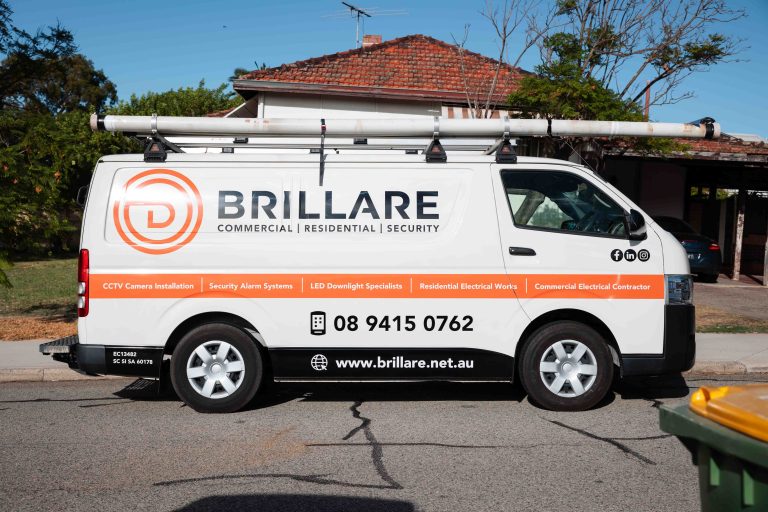
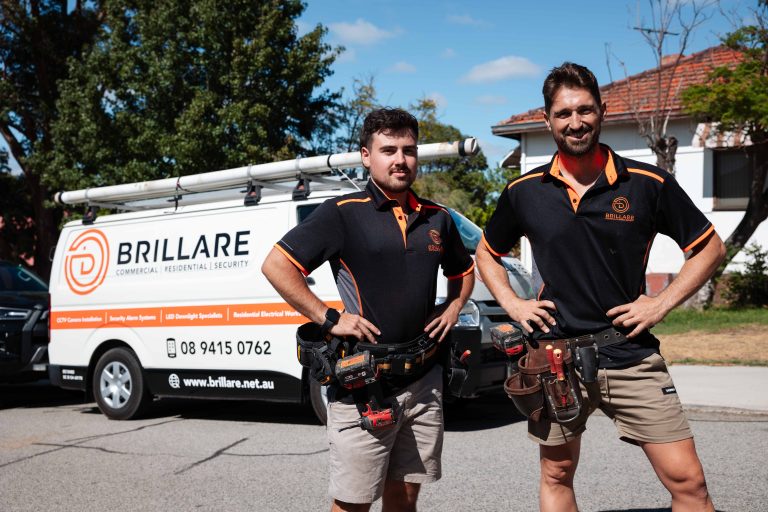
This is also where Brillare’s track record becomes relevant. With 500+ five-star reviews from Perth homeowners and a lifetime workmanship warranty on every job, Brillare’s licensed team handles the full scope: assessment, Western Power coordination, physical works, and final sign-off. You deal with one contractor from start to finish — with transparent, upfront pricing and no surprises.
What to ask before booking any job that involves Western Power
Use these six questions as a checklist before confirming any booking for network connection work in Perth. A contractor who genuinely holds Western Power authorisation will answer all of them without hesitation.
“Do you hold a current WA electrical contractor licence issued by Building and Energy WA?”
Baseline verification. Every legitimate electrician answers yes and provides the number.
“Are you authorised to coordinate directly with Western Power for service connection and point-of-supply work?”
The distinguishing question. Not all licensed electricians hold this authorisation. The answer should be specific and immediate.
“Will Western Power need to be notified for this job, and how do you handle that process?”
A contractor who understands network connection work will describe the notification or application process without prompting. Vagueness here is a red flag.
“Will the service line need to be de-energised? Who arranges that with Western Power?”
Your contractor should be managing this directly. If they are asking you to contact Western Power, that is the wrong arrangement.
“What permits or notifications are required for this job, and will you provide copies?”
Legitimate network connection work generates documentation. Expect it and ask for it.
“What is the full timeline from booking to energisation, including Western Power’s scheduling lead time?”
Western Power scheduling affects timelines in ways that go beyond the contractor’s own availability. An experienced contractor will give you a realistic timeline that accounts for both.
These questions cost you nothing to ask and protect you from the most common and most expensive mistake Perth homeowners make with this category of work: booking a contractor who cannot deliver what the job actually requires.
Frequently Asked Questions
Any work that touches the Western Power network boundary requires specialist authorisation. This includes service line connections and disconnections, metering installation and replacement, private power pole replacement, underground power connection, service line upgrades, and point-of-supply modifications. Internal wiring, switchboard work within the property, and appliance connections are handled by any licensed electrician. The boundary is the point of supply.
No. Defect notice rectification involving the point of supply, service line, or private pole requires an electrician with Western Power network authorisation. A standard licensed electrician cannot obtain Western Power sign-off for this work. Engaging one anyway means the defect notice remains open regardless of the physical work completed — and the cost of correcting that situation falls on the homeowner.
Western Power scheduling lead times vary by job type and network demand in your area. A de-energisation and re-energisation for a private pole replacement is typically scheduled within five to ten business days of the application. A new subdivision connection or a three-phase upgrade involves a longer application process. Your electrician should be managing this timeline directly and keeping you updated. Ask for a realistic timeline at the assessment stage, not after the booking is confirmed.
A Western Power defect notice specifically identifies a non-compliance on the customer-owned portion of the network infrastructure — typically a private power pole, private service line, or point-of-supply installation that fails to meet current safety standards. A standard electrical fault is a problem with the internal wiring or appliances within the property. The two require different contractors, different processes, and different sign-off procedures. A defect notice that is not resolved within Western Power’s specified timeframe can result in the service being disconnected.
What to do next
Network connection work in Western Australia sits in a specific authorisation category that most online searches will not explain accurately. The ASP framework from NSW and Queensland does not apply here. The relevant question in Perth is not “do you have Level 2 accreditation” — it is “are you authorised to coordinate with Western Power for this specific type of work.”
Now that you know that distinction, you have what most Perth homeowners in this situation are missing: the right question to ask before you book.
If your property needs network connection work — a defect notice resolved, a solar grid connection, an EV charger service upgrade, a private pole replaced, or any job that requires Western Power coordination — the next step is a free assessment from an electrician who can confirm exactly what is needed and handle every stage of it.
Brillare’s licensed WA team has completed Western Power coordination work across Perth metropolitan and outer-suburban properties. 500+ five-star reviews. Lifetime workmanship warranty. Transparent, upfront pricing with no surprises.
Call 08 9415 0762 or book your free, no-obligation assessment online. We will confirm what your job requires, whether Western Power coordination is needed, and what it will cost — before any work starts.






 @brillareelectricians
 brillare_electricians
 brillare electricians
 brillare perth electrician
  @brillareelectricians